New study highlights the importance of early support for families in oral healthcare
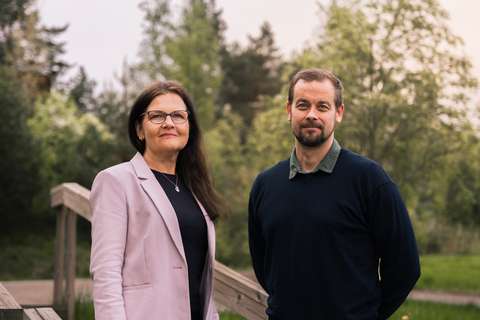
Arja Liinavuori, Service Line Director for Oral Healthcare Services, and Chief Dental Officer Risto Virtanen, both from our wellbeing services county, have investigated the association of parents’ dental anxiety with the oral care and brushing of 1-4-year-old children’s teeth.
The findings help us further develop preventive oral healthcare services that respond to the needs of families.
The study examined the association of parents’ dental anxiety with the stability of brushing their own and their 1-4-year-old children’s teeth. It is part of the extensive Finnish FinnBrain(external link) research project, which follows the wellbeing of children and families over a long period.
A parent’s dental anxiety is reflected in their own oral care
A key finding of the study was that dental anxiety was above all associated with the parent’s own oral care.
“The clearest finding was that dental anxiety was linked to the mother’s own toothbrushing. No similar association was found for fathers in the same way,” says Liinavuori.
By contrast, no clear difference was observed in young children’s toothbrushing based on whether the parent was afraid of dental treatment. This suggests that parents often take care of a young child’s oral hygiene despite their own dental anxiety.
A parent’s example has a lasting impact
Although no direct association was found between parents’ dental anxiety and a young child’s toothbrushing, parents still serve as important everyday role models. Oral care habits are formed early and often persist well into adulthood.
“Good oral care habits in early childhood help prevent oral diseases and reduce the need for treatment later on,” says Virtanen.
A major strength of the FinnBrain study is its long follow-up period. In the future, this will make it possible to examine how early habits and parents’ experiences are reflected in children’s oral health at later stages of development as well.
Research findings support the development of services
The study provides oral healthcare services with valuable information on where support should be targeted. Identifying parents’ dental anxiety and responding to it with compassion can strengthen the oral care of the entire family.
“When parents are supported with their dental anxiety, prevention can be strengthened at the same time and future needs for treatment reduced,” says Liinavuori.
The findings are particularly useful in work with expectant families and families with young children. In this way, oral health can be influenced at an early stage.
Maternity and child health clinics and dental clinics in Western Uusimaa Wellbeing Services County support families together
In our wellbeing services county, we meet families with children early and through preventive services in both maternity and child health clinics and oral healthcare, with an emphasis on guidance, discussion and individual support tailored to each family.
Initial dental appointments focus on counselling and on building a positive care relationship. During these encounters, we also take parents’ own experiences and any possible dental anxiety into account. We approach their anxiety with compassion and calm, moving forward at each family’s own pace.
We encourage families in our wellbeing services county to make oral care part of everyday routine, step by step. Where needed, we also make use of remote services, such as video counselling, to lower the threshold for seeking care. Early, trust-based support helps strengthen good oral care routines and prevent the need for treatment.
Read the research article down below: